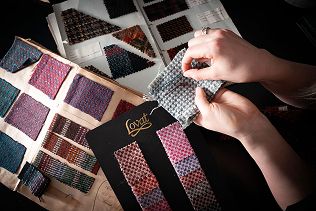
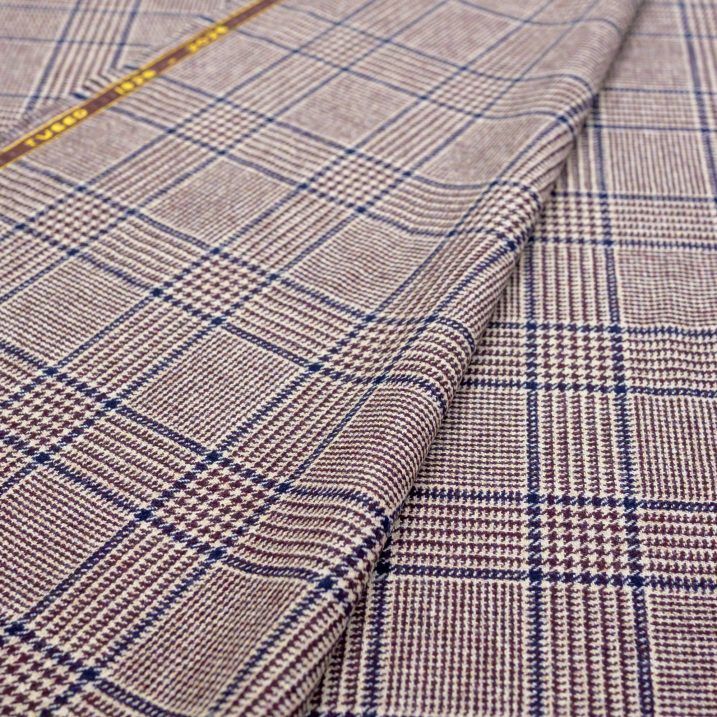
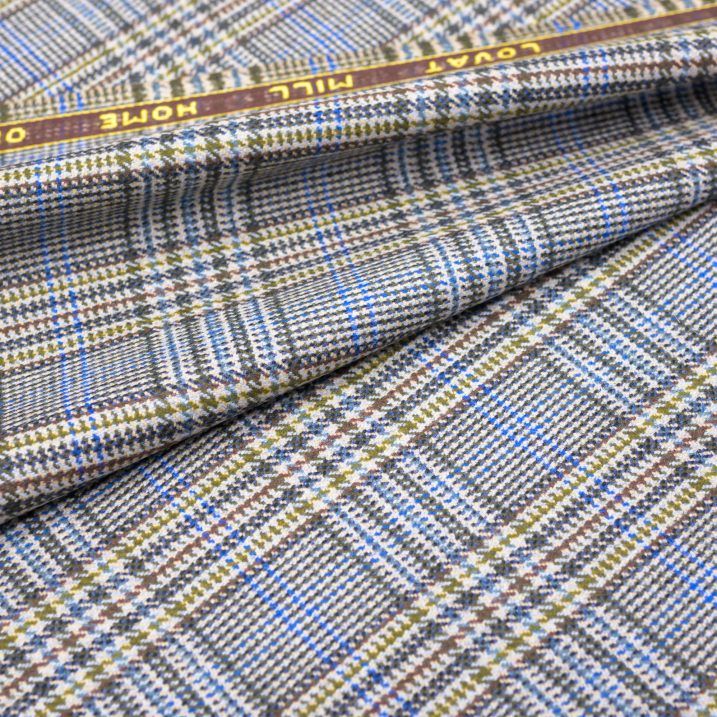
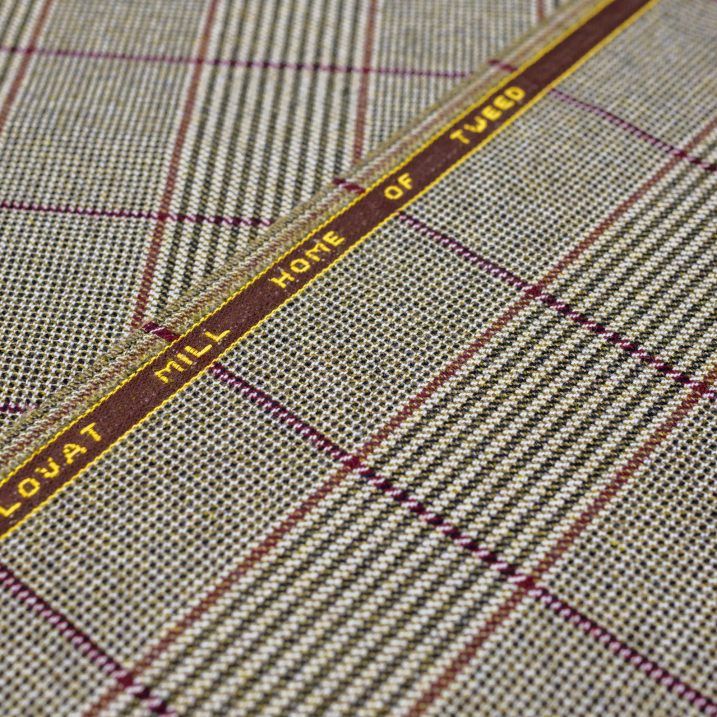
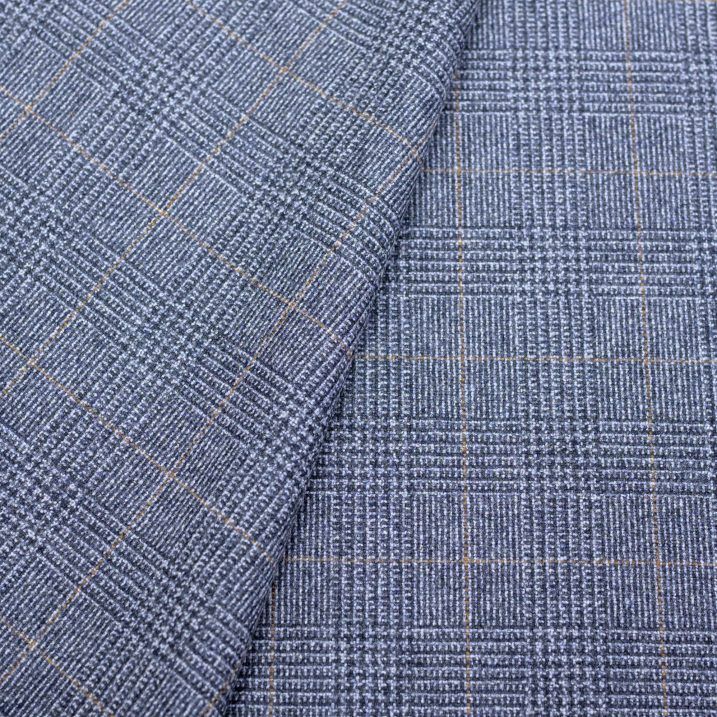
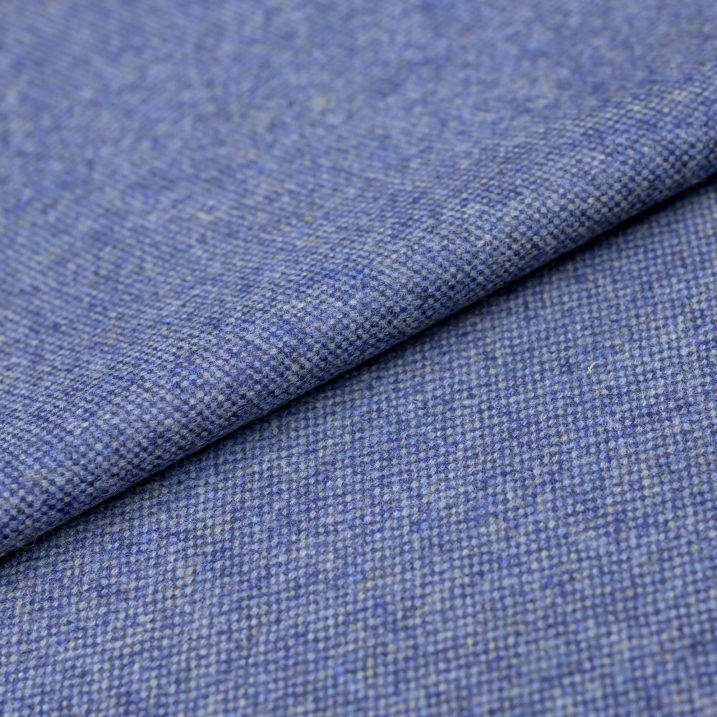
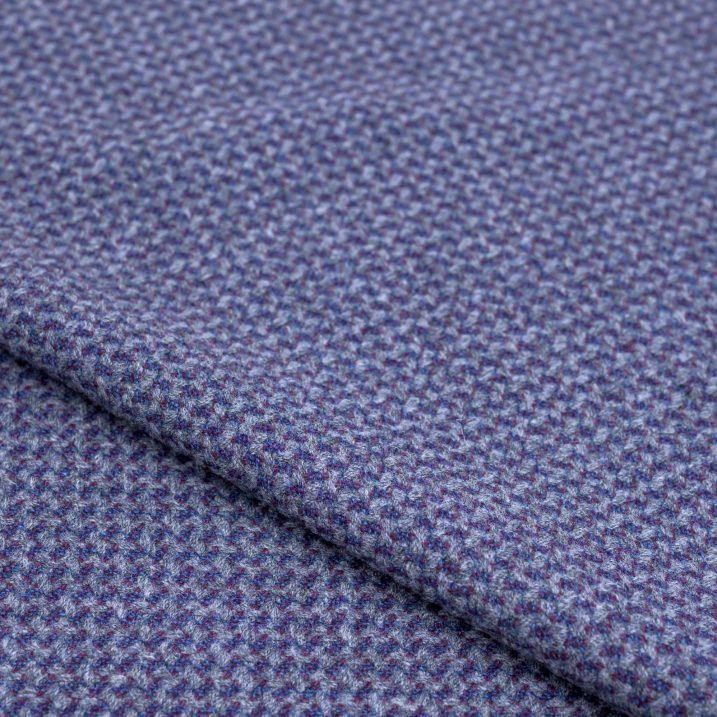
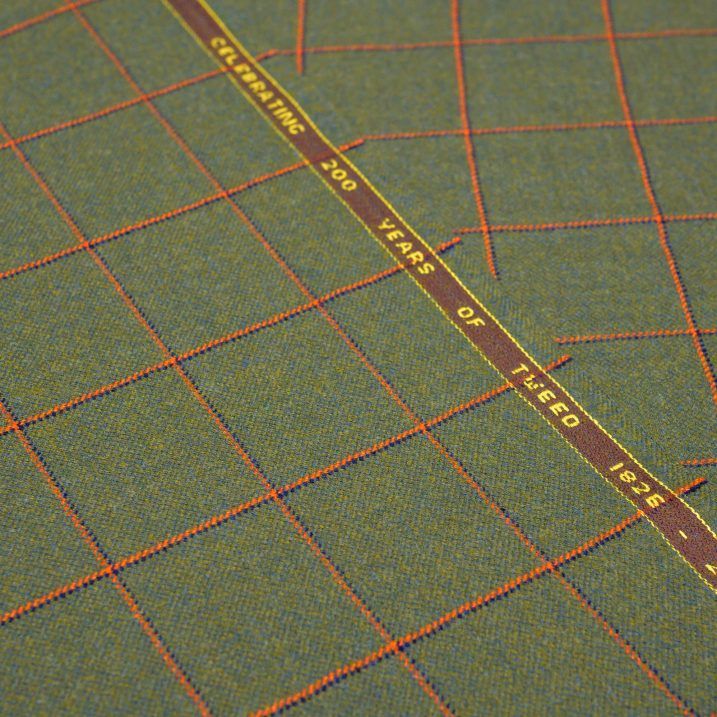
With this collection we tell the story of Tweed from its inception in 1826 to the present day. 17 cloths have been curated to show how each played its part in this 200 year history.
Lovat Mill’s designers today ‘stand on the shoulders’ of those extraordinary innovators of the past. This heritage inspires our current generation to a lasting commitment for excellence in design, structure and colour as Tweed enters its third century.
In the Scottish Borders town of Hawick, which gave this most versatile of cloths its distinctive character and name, its far-reaching success is a source of pride. At Lovat Mill – the Home of Tweed – it is an ongoing passion, 200 years in the making.
Read The HistoryFind out more about the 200 year collection
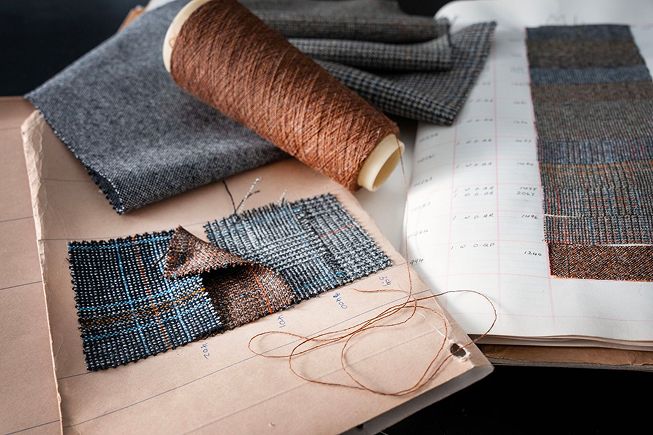
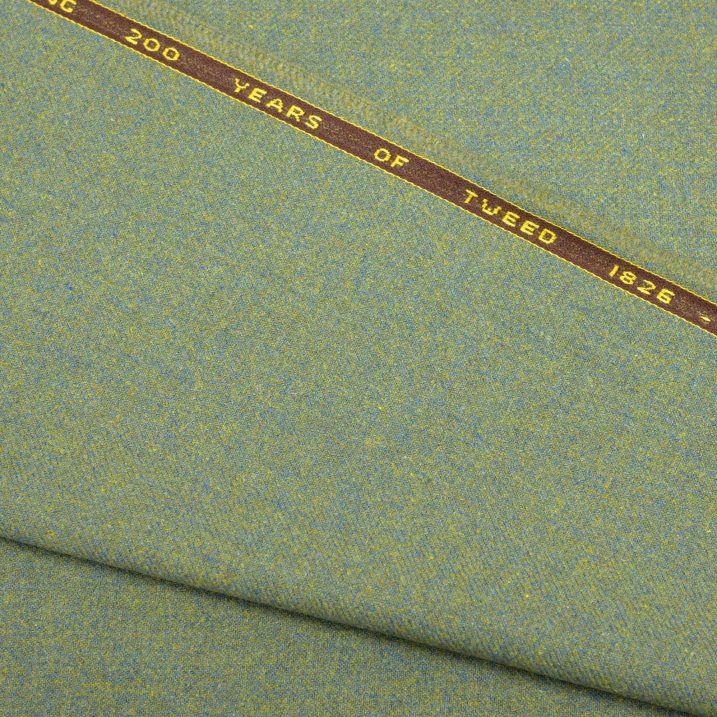
Braemar uses the original ‘tweel’ construction that gave tweed its name. It is woven in the versatile two and two twill weave using hard-twisted Cheviot yarns, in colours reflecting the Borders landscape. Our native Cheviot wools are highly resilient, providing warmth and durability perfect for Highland estates.
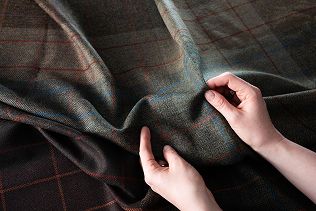
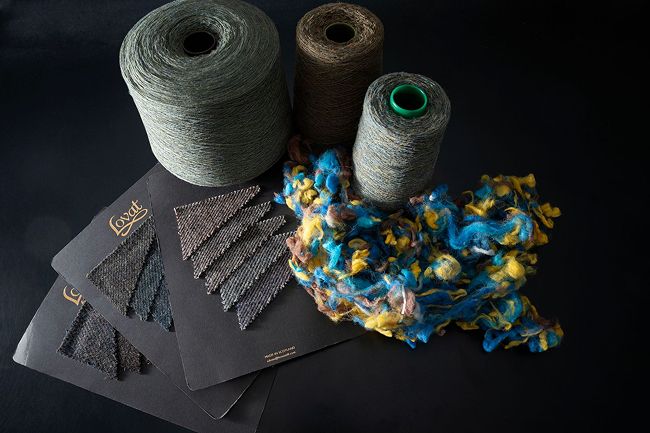
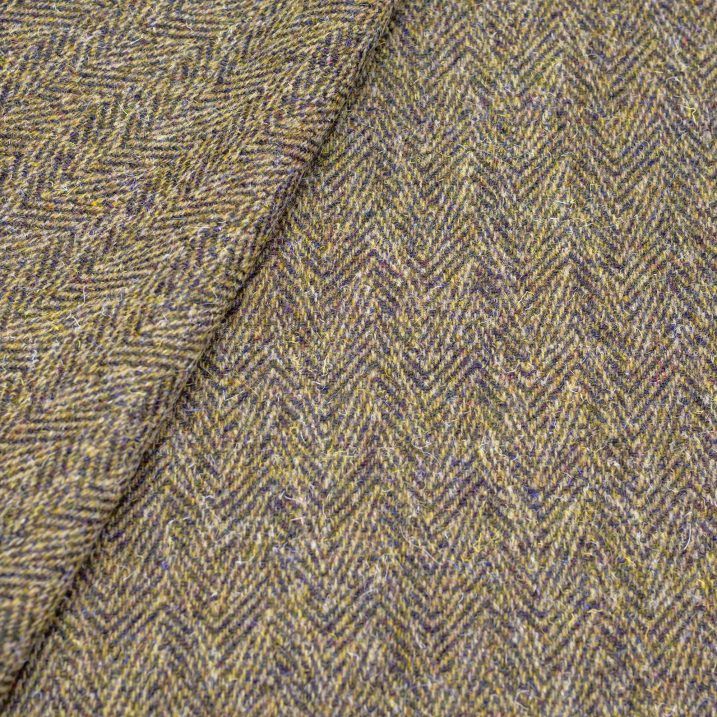
Lovat Mill is famed for its vibrant colour mixture yarns, many of which date from the early 1800s. Wool is dyed to create an array of vivid components, which are blended in set proportions before spinning to create Lovat’s unique blueish/greenish shade. This pattern is a good example of a Lovat tweed for the hills in early autumn.
Braemar Quality: 780gms per metre,
25 ounces per yard.
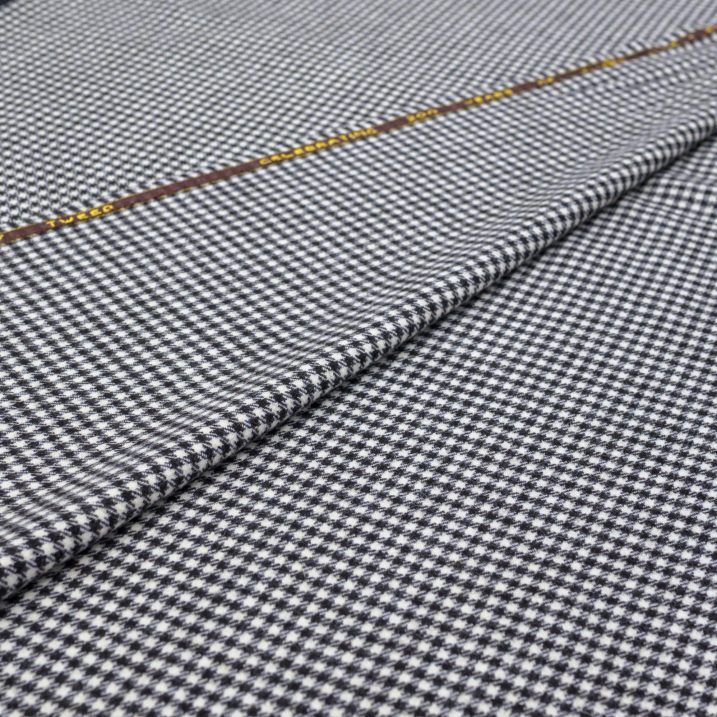
This design classic is woven on a two and two twill in stark black and white yarns using a process known as six and six colouring.
This timeless pattern, along with Houndstooth and Glenurquhart, forms the basis of the many District Checks used as livery on Scottish country estates. This pattern was first worn by shepherds as a vast plaid called The Maud, which was folded to carry newborn lambs.
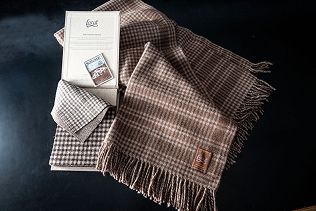
It takes a whole Shetland fleece to weave a yard of Shepherd’s Check in this, Lovat’s popular Sonsie tweed – undyed Pure Shetland wool spun on Scotland’s most northerly isles.
Sonsie Quality: 430gms per metre,
14 ounces per yard
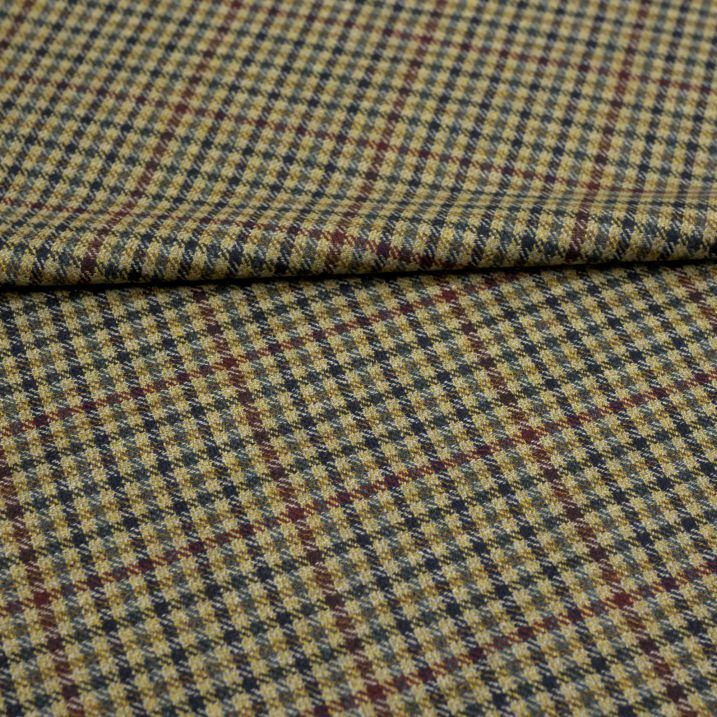
This variation of Shepherds Check takes its name from The Gun Club of New York, which adopted a forerunner of this pattern as its official livery in 1874. This classic arrangement of colour was inspired by the District Check associated with Coigach estate in Wester Ross.
Groups of light, medium and dark threads alternate in both the warp and weft.
Lovat was the first Border mill to combine woollen spun yarns with worsted yarns to create lighter tweeds suitable for export in the Victorian era. Seen here in Lovat’s Teviot quality cloth, this Gunclub blends fine lambswool and fine crossbred wools to give softness and strength to the tweed.
Sonsie Quality: 430gms per metre,
14 ounces per yard
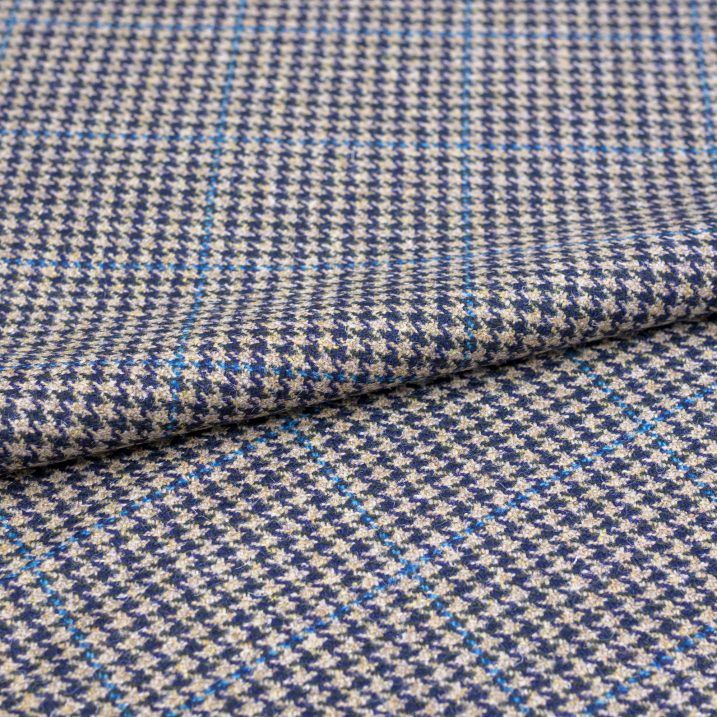
The houndstooth effect is created by light and dark threads in groups of four on a simple 2 and 2 twill weave. Traditionally, it is considered only correct when the ‘teeth’ join horizontally.
In France it is known as Pied de Poule.
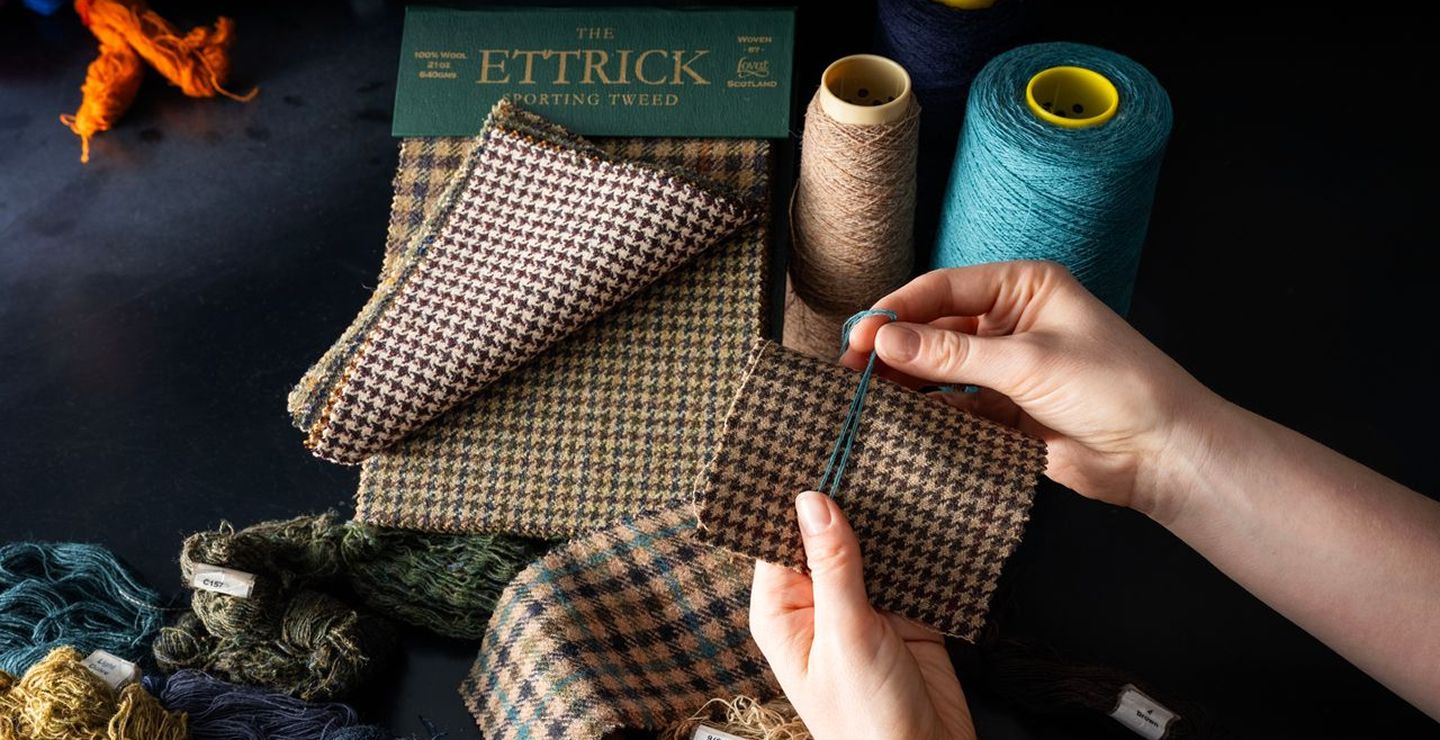
This eye-catching classic is woven here in Lovat’s Ettrick quality cloth, which tightly twists softer woollen fibres with stronger worsted yarns to create a robust sporting tweed.
Ettrick cloth is woven from the wool of Cheviot sheep, which were first bred for the Scottish Borders hills 300 years ago and are famed for yielding quality fleeces.
Using these, Hawick’s brilliant Victorian cloth makers perfected the art of dyeing strong colours – to capture as never before, in subtly hued twists and yarns, the landscape of Scotland.
Ettrick Quality: 640gms per metre,
21 ounces per yard.
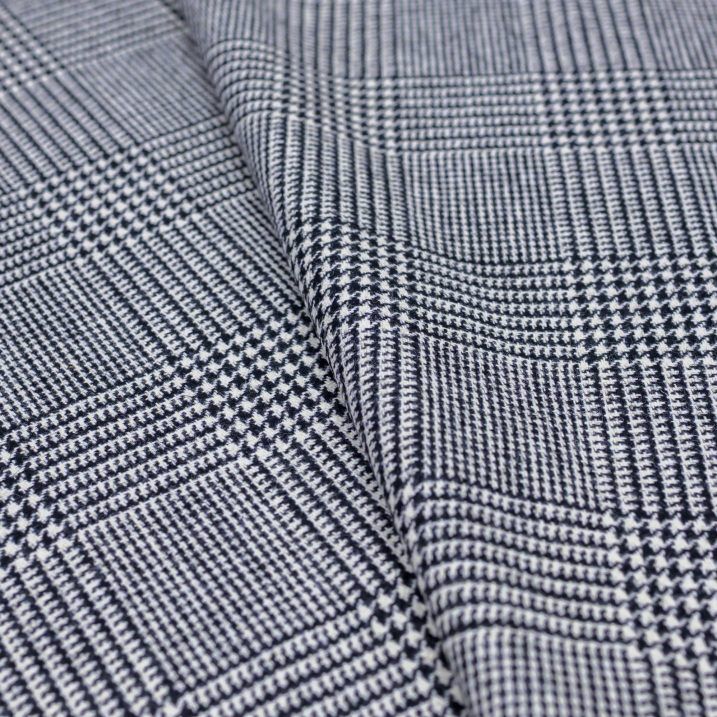
One of Scotland’s best-loved District Checks, Glenurquhart has long been a popular template for designers and is produced in a range of colours. It is seen here in Lovat’s Kirkton quality cloth, which uses crisp Borders bred wools but without the worsted twist, to create a lighter cloth that retains Cheviot tweed’s durability
Often misnamed as Prince of Wales Check, Glenurquhart has its own elegant appeal and a host of unique design flourishes. It was first produced in black and white with blocks of two and two and four and four colouring in both the warp and weft. Extra threads were later added to the weft’s two and two section, extending the check length to create a more refined appearance.
Kirkton Quality: 500gms per metre,
16 ounces per yard
When the soon-to-be Edward VII visited Glenurquhart on a hunting trip, the estate tweed caught his style-conscious eye. He wore it so much that it erroneously assumed the nickname Prince of Wales Check.
A true Prince of Wales has a bold Murray red and white base with overchecks in slate. Its pattern is a ‘double-width’ repeat in which the two and two section of hairline weave alternates to further distinguish the design.
It is seen here in Ettrick cloth with woollen and worsted yarns – from Cheviot and Crossbred wools respectively – tightly twisted and firmly woven.
Ettrick Quality 640gms per metre,
21 ounces per yard
Scotland’s long-established wool trade with the low countries and central Europe – through the port of Berwick-upon-Tweed –increased the variety of cloths being woven by Borders mills. Saxony became a byword for softer, low lustre lambswools that contrast with the bright crispness of home-grown Cheviot wools.
Later still, the availability of merino wools widened the scope of the designers yet further.
When a new railway linked Hawick to the Midlothian coalfield in 1849, the town’s textile mills flourished as never before. Endless supplies of coal – from which synthetic dyes are derived – gave designers a whole new colour palette from which to work as energy costs gave our industry’s dyers free rein.
Woven here in two-ply Saxony wool, with its firmly twisted yarns, this is a basic Glen check embellished with brightly coloured decorative threads that give the cloth a more complex character.
420 Quality: 600gms per metre,
19/20 ounces per yard
This classic District Check with a twist is produced in three variants – original Russell, Russell Glenurquhart and Russell Glenstripe.
Its character is created by combining a high contrast warp in light and dark yarns with a soft, drab weft. The overchecks appear to be different colours in warp and weft but are, in fact, identical. The vertical-horizontal interplay of threads throws the weft, so it looks brighter.
The original Russell as seen here in 325 quality cloth, its structure – fine lambswool tightly twisted with crossbred worsted – is unchanged since its creation in the 1880s. The blend has enabled Lovat’s designers to create light, yet strong tweeds for growing export markets.
325 Quality: 545gms per metre,
17/18 ounces per yard.
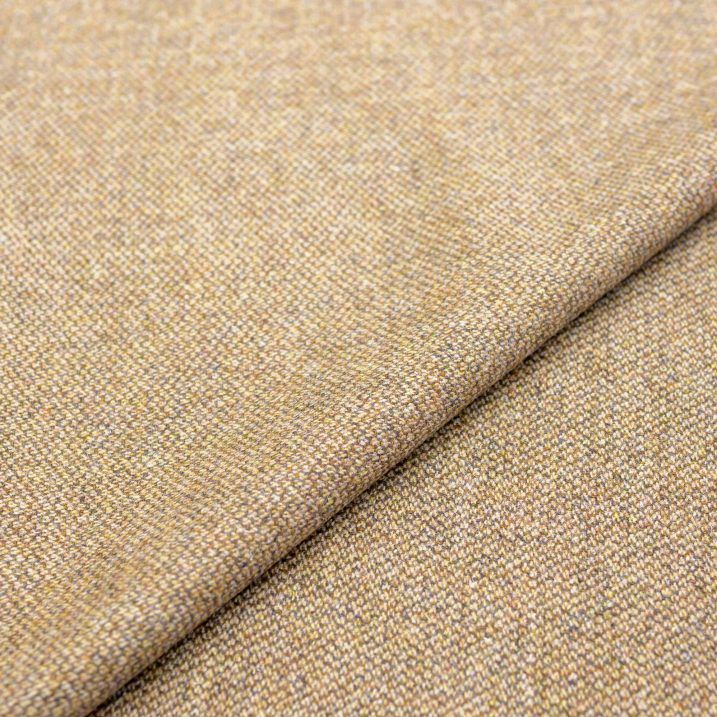
Thornproof is a traditional plain weave cloth – the simplest of all weaves. Thornproofs were first woven in so-called heavy setts, in which the interwoven threads are tightly packed to create firm, weighty fabrics.
Thornproof’s durability is built on highly twisted two-ply lambswool yarns, usually of contrasting colours to give a broken surface appearance.
Seen here in substantial 69 quality cloth, this tweed staple is so called not because thorns cannot penetrate it; rather that its structure and density prevent the plucking of threads by briers.
69 Quality: 500gms per metre,
16 ounces per yard
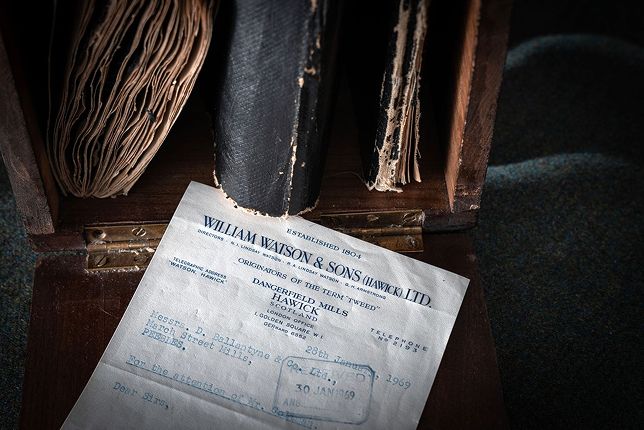
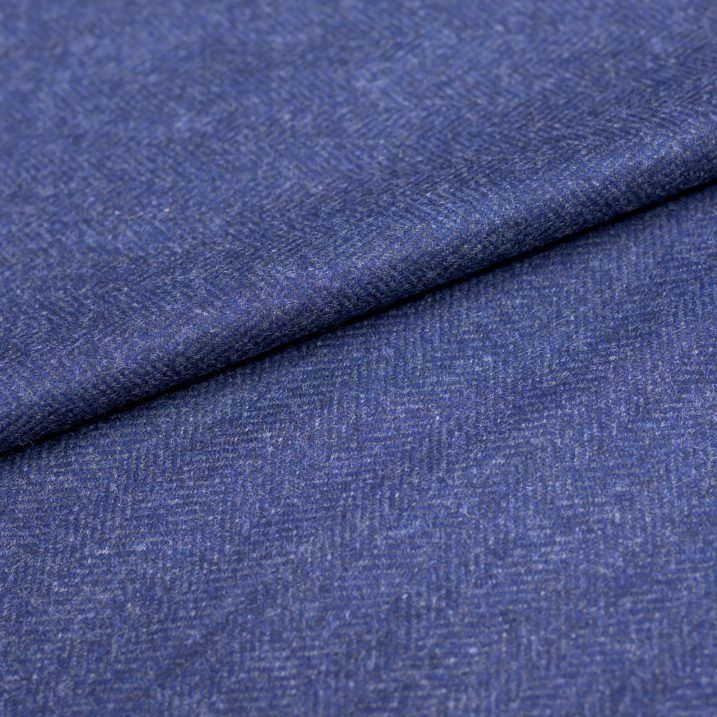
This delightful cashmere design – in classic herringbone weave – is inspired by a pattern from the archive of Hawick tweed pioneer William Watson. Its pleasing appearance is created by reversing the direction of a simple twill so that the diagonal line is broken to create a stepped pattern. The cloth’s textured character mirrors the chevron effect seen in the delicate bones of herring – fondly known in Scotland as ‘silver darlings’.
Scottish cashmere production grew during the mid 1800s with improvements in the dehairing process that separates fine fibres from coarser ones. Lovat’s archive shows cashmere was first woven at the mill more than a hundred years ago. The specialised skills of our forebears handed down to give today’s artisans the expertise required to handle such a beautiful raw material into an extraordinary fabric of pure luxury.
FDCS Quality: 350gms per metre,
11/12oz per yard
The ingenuity of Victorian designers appears to have known no bounds. Here is a twill weave created to capture the way light plays off a game bird’s plumage as it sheds feathers. This dazzling effect is achieved by a complex process that involves varying the angles of twills and the threads float lengths.
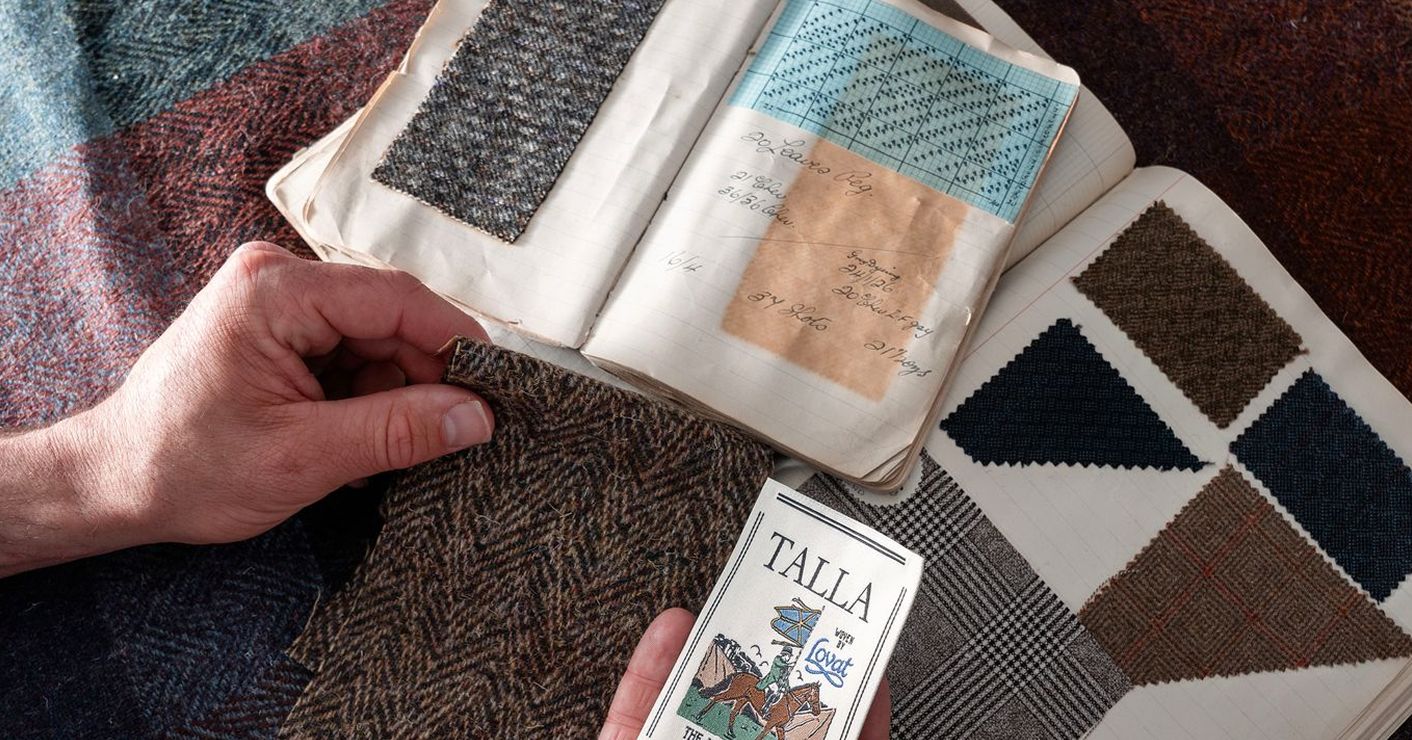
Gamefeather is seen here in Lovat’s midweight Talla cloth – a traditional tweed featuring the contrasting characteristics of Blackface and Cheviot fleeces. Within a Blackface fleece there exists brittle Kemp fibres which do not accept dye readily but give the cloth a unique homespun character and its flecks of colour, while Cheviot’s softer strands easily absorb the rich hues needed for such mixture shades.
Talla Quality: 480gms per metre,
15/16oz per yard
Ettrick cloth’s subtle blend of worsted yarns, twisted with woollen spun threads, chimes perfectly with this enchanting weave. The cloth’s extraordinary durability is tailor made for Bell Celtic – known as Capo di Prete, or Priest’s Cap, in Italy. Add to the mix those strong mixture colours that have enlivened Lovat’s story and you have a flawless match.
The weave is so called because its pattern creates an effect that resembles a small bell, and its distinctive curved shape is most prominent when lighter warps are paired with darker wefts.
Ettrick Quality :640gms per metre,
21 ounces per yard
Covert is made for British weather, its durable, tightly woven warp famed for its smooth finish and resistance to wind and water. It is indeed a true friend whenever a storm is brewing.
This high performance fabric –– from the French couvert – is a cloth of contrasts. Its worsted yarns of smooth, combed wool in the warp complement the tousled, carded wools in the weft. The weave lifts each warp thread over four weft threads and under one, presenting a smooth, lustrous surface to the elements on one side while providing much-needed warmth on the other.
Coverts were once much heavier and, although weights have dropped markedly over the years as tastes have changed, the essence of this most versatile of cloths endures.
Breik quality: 495gms per metre,
15/16oz per yard
One of the mill’s heaviest tweeds, Brig weighs in at almost a 1000 grams per metre. A Lovat staple for generations, it remains a popular choice for equestrian sports and hunting. Heavy – though its forebears were heavier still – Brig uses the same warp-faced weave as the covert, and its high-twist worsted spun yarns of cross-bred wools in the warp make Brig supremely durable.
The weft draws on the rugged performance of local Cheviot wools that offer sheep protection against the worst of Scotland’s weather. This extraordinary breed survives, even thrives, through the bleak winters of Ettrick Forest, Eskdalemuir and Tweedale. Lovat Mill has indeed been fortunate to have such a plentiful natural resource so close to hand over the past 200 years.
Brig Quality 900gms per metre,
29/30 ounces per yard
There is a relaxed, drapey feel to this cloth, named after the coarse, heavy fabric used to make sacks for carrying hops. Instead of only a single thread, pairs of threads are woven together, following a two and two path in the weave, giving the fabric a distinctive handle.
The yarns for this Abbot quality cloth are of soft, low-lustre Saxony wool, kind to the hands and none too heavy.
A key colour mixture in this pattern is Light Lovat, its delicate blue-green tones fusing elements of land, sea and sky, each of them perfectly at home in Hopsack’s open, airy appearance.
Abbot HS quality: 420gms per metre,
13oz per yard
This enduring classic, first made famous by Scottish Borders Mills, cleverly combines a basic plain weave with long floats. Dating back to the 1850s, this novel hybrid approach makes possible a dizzying array of colour and weave effects.
Hawick’s Victorian designers were at the heart of an explosion of design ideas, colour creation and weaving innovation, using groundbreaking techniques to create the ladies costume cloths so ardently sought by Paris fashion houses.
Eager to expand their trade, Borders mill owners invested heavily in design to push the boundaries, creatively and geographically. This openness to fresh ideas, and markets, continues to this day with new designs being created each year for spring and autumn collections – at home and further afield.
TDA Quality: 710gms per metre,
23 ounces per yard
The early District Check designs developed initially around block checks and the following Windowpane checks. Windowpanes gave designers the opportunity to overlay the rich mixture and twist grounds with colourful decorative flourishes.
Its transformative effect is seen here in a modern stretch tweed that has Lycra worked into the weft on a base of woollen and worsted twists. The designer’s choice of hi-vis yarns in the overcheck brings to the sporting field a bold contemporary edge.
New technologies have helped create agile, adaptable fabrics and finishes, enabling Lovat to produce performance tweeds that are high strength, rain-resistant and washable.
This is how it has always been for Scottish Borders designers. Instinct, invention and innovation run through their story – from the earliest days until now – one continuing thread.
330 Stretch: 430 gms per metre,
14 ounces per yard